Scam signals
The Bank Call That Wants You to Move Your Money
A calm callback routine for an alarming call, including what changes when a caller already knows something true about your account.
A message from an unfamiliar number asks for a small favor. Here is how to check who is asking without making a real relative feel accused.
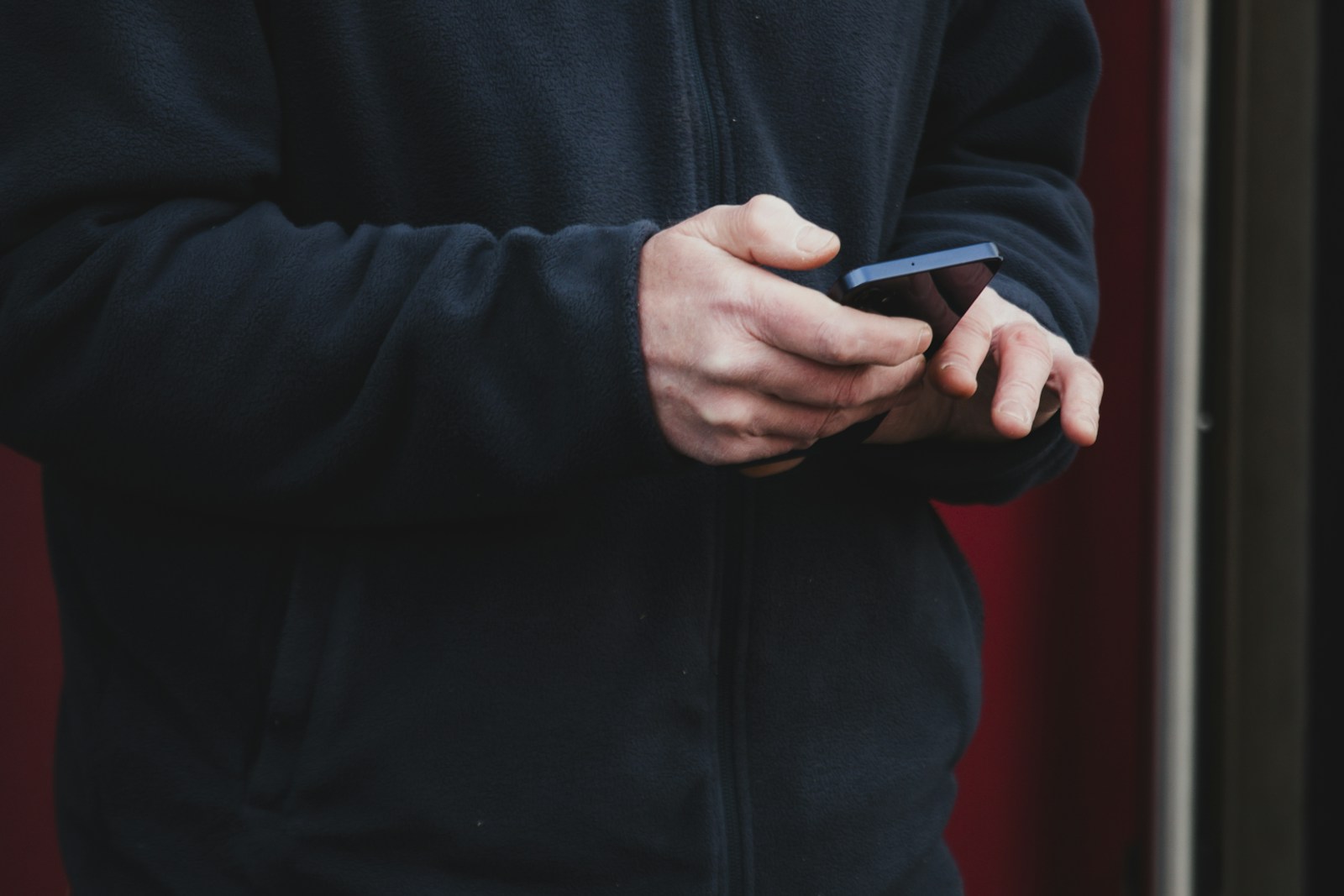
A message from an unfamiliar number says a relative has broken their phone. An urgent bill follows. The story may sound ordinary enough to be true, which is exactly why I would avoid making a decision about money inside that new conversation. The useful first step is to preserve the contact route you already had and use it to check what happened.
The emotional hook is immediate. It plays on our natural willingness to protect our children or close relatives. Yet, as the UK National Cyber Security Centre notes, unexpected digital messages can easily impersonate trusted individuals, using manufactured urgency as a psychological pressure signal. The distinction I use in daily life is simple: the emotion belongs to the person we care about, but the delivery mechanism belongs to an unknown entity.
You can take the concern seriously without accepting the sender's identity or payment instructions. This guide follows a hypothetical broken-phone request through a successful callback, an unanswered call and a separate payment check. The practical aim is to make room for verification while continuing to help a relative through routes that the unknown sender did not choose.
Imagine a hypothetical scenario where an unfamiliar mobile number pings your phone with a message claiming to be from your adult daughter. The text explains that her phone broke in a cafe, this is her temporary number, and an urgent bill is due immediately. There are three distinct decisions hidden within this short narrative: you are being asked to accept a brand new identity, replace the established route you use to reach her, and move money quickly.
You can postpone all three of these decisions without having to determine instantly whether the story is true. Leave the old contact entry exactly where it is in your address book. Do not merge it with the new text thread, and do not update your records based solely on the incoming claim. If the message includes a convenient web link or a button to download a payment app, leave those elements strictly alone.
A familiar photograph, nickname or turn of phrase can make a new sender feel close to home. Those details do not establish who controls the account. The FTC also warns that caller ID can be spoofed, so even a reassuring incoming call should not settle the question by itself. Start your own contact through details you already hold and consider the whole conversation rather than relying on one familiar cue.
To understand why these messages succeed so often, we must examine the specific mechanics of the script. The hypothetical text we are analyzing relies on three psychological levers: inconvenience, isolation, and urgency. By claiming a broken phone, the sender neatly explains away why they cannot take a normal voice call or why their usual profile picture might look slightly different on an alternative messaging platform.
Isolation is achieved by insisting that you communicate only through this new chat interface because the old device is completely inaccessible. Urgency finishes the work by placing a strict time limit on the proposed fix, suggesting that a fee, a late penalty, or an embarrassing situation will unfold if you do not act within the hour. This design is intended to bypass calm analytical thinking and push you straight into a reactive compliance state.
Recognizing the pattern does not require treating every mishap as a lie. It gives you a reason to slow the requested action down. I would separate the claims on paper if needed: new number, broken phone, urgent bill, different recipient. Each is something to check. There is no special length of pause that proves safety; what matters is using the pause to obtain information from a route outside the new thread.
Close the messaging app entirely. Open the contact card you already had saved for your relative and initiate a voice call from there. The distinction here is small in physical effort but massive in security value. Pressing the call button inside the suspicious new chat window simply loops you back to the unverified person, who may use a synthetic voice or an accomplice to maintain the illusion.
Calling the pre-existing number gives you an independent route. If nobody answers that call, treat it precisely for what it is: an unanswered call, not definitive confirmation that the phone really broke and that the text message is authentic. People frequently miss phone calls while driving, working, or sleeping, so an unanswered ring requires patience, not panic.
A second effective option is reaching out to someone else who can verify the situation independently. You might call a spouse, a sibling, or a roommate whose contact details are safely stored in your address book. Ask them simply if they have spoken to your relative today, rather than forwarding the suspicious request or repeating specific financial amounts. If a message describes an immediate physical danger, always use local emergency services or trusted local authorities instead of sending money to an unknown account.
When dealing with family, tone matters immensely. You do not want to sound accusatory or make a genuine relative feel interrogated if their phone genuinely broke. Having a standard, polite verbal script prepared ahead of time removes the awkwardness of hesitation and provides a calm framework for everyday family communication.
If you reach your relative through an established route, a calm script can make the check feel routine: I received a message about a broken phone and a bill. I am calling the number I already have before changing anything. If you cannot yet reach them, there is no need to debate with the unknown sender. Keep trying trusted contacts and leave the money request unresolved until you have independent information.
If the person behind the text insists that they cannot speak on a voice call because their microphone is broken or they are stuck in a lecture, do not negotiate with the excuse. Agree on a short household rule in advance: whenever money or sensitive favors are requested from a new number, the family rule is to pause and verify through a secondary trusted person. This shared understanding protects everyone from being singled out for manipulation.
Consider what happens when the independent verification fails completely. You receive the text about the broken phone and the urgent bill, you dial the old number, and it rings out with no answer. You try a sibling, and they are also unreachable at work. The natural human discomfort of uncertainty starts to creep in, tempting you to send a small amount of money just in case the emergency is real.
An unanswered callback leaves the story unverified. It does not establish that the phone broke, and it does not establish that the relative is safe. Keep those uncertainties separate. Sending a small test payment does not identify the recipient or prove the rest of the request is legitimate. Instead, try another trusted contact or a known place where the relative may be reached, without letting the unknown sender provide all the alternatives.
If there is a credible concern about immediate physical danger, contact the appropriate local emergency service or someone who can check safely. Do not dismiss a possible emergency just because the text could be fraudulent. You can seek help for the person while refusing an unverified transfer. For an ordinary overdue bill with no indication of danger, waiting for a trusted conversation is a more reasonable next step than treating the sender's deadline as an obligation.
Suppose you later speak with your daughter through an established contact and confirm the circumstances in a conversation that makes sense. That provides better evidence than a text from a new number, but a familiar voice alone is not a guarantee of identity. Even once you are satisfied about the person, check the payment separately. The bank details copied into the earlier thread may still be wrong, outdated or unrelated to the actual bill.
If a bill or invoice was mentioned in the text, discuss that financial transaction completely separately through known, secure contact routes. If an organization or business is involved, navigate to their official website using details you obtained independently rather than clicking links provided in the text. Verifying a relative's safety is an entirely separate task from validating payment instructions.
If someone in your household unfortunately falls for the trick and completes a transfer before realizing the error, contact your bank or payment provider promptly using the official telephone number printed on the back of your card or their verified app. Save the communication records to share with institution fraud teams. Approaching mistakes with patience rather than blame makes it far easier for other family members to speak up quickly if something similar happens to them.
It may add minor context, but personal facts like birthdays, pets, and travel plans can often be discovered through social media. Keep the independent callback route even when an answer sounds right.
Offer practical help over a known route. You can call the person, contact a trusted third party, or reach out to local emergency services without accepting a money transfer request from an unverified chat.
Frame the habit around general household safety rules rather than personal suspicion. Explain that your family policy is always to double check new numbers by calling established lines first.
Act on what was exposed. Contact the payment provider promptly about a transfer or bank details, and change an exposed password at the genuine service and anywhere it was reused. Follow official device guidance if software or remote access was involved. Keep relevant records privately; recovery is not guaranteed.
No, because profile pictures and display names can be easily copied from public social media profiles. Visual familiarity does not verify who currently controls the messaging account.
The habit I would keep is simple: a new number does not get to replace the old contact route and approve its own payment request in one conversation. Check the person independently, check the destination separately and seek appropriate help if there is a real safety concern. If a mistake has already happened, a prompt, blame-free response helps the household take the next useful step.
Have a correction? Contact the editors.
A calm callback routine for an alarming call, including what changes when a caller already knows something true about your account.
Keep a simple sale from turning into a request to move someone else’s money, even when the payment appears convincing.
Separate an invoice, an actual charge and a request to control your computer before trying to cancel anything.